Coffee Flavor Wheel: Tasting Notes Explained
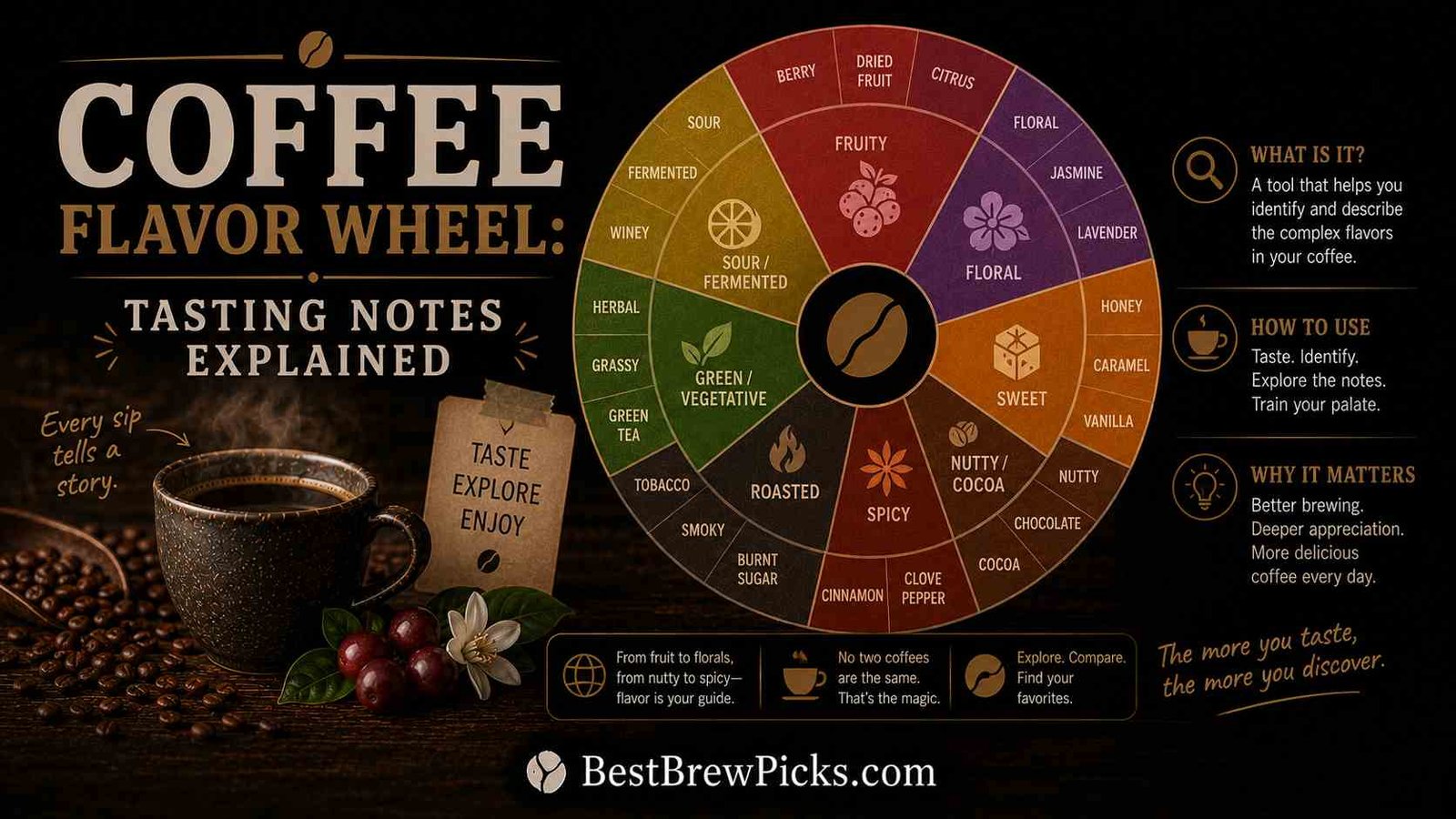
Coffee Flavor Wheel: Tasting Notes Explained shows you how to identify and describe coffee flavor with more confidence. The coffee flavor wheel groups tasting notes into organized categories, which makes it easier to move from vague impressions like “fruity” or “strong” to more specific descriptions such as citrus, berry, chocolate, spice, or floral.
This matters because many coffee drinkers notice differences but do not know how to name them. As more people buy specialty coffee, origin coffees, and lighter roasts, a simple flavor vocabulary helps them choose better beans and understand why one cup tastes brighter, sweeter, or more complex than another. It also makes home brewing more useful because you can connect taste changes to grind, roast, and extraction.
This article explains what the coffee flavor wheel is, how to use it, what common tasting notes mean, and how roast and brewing affect flavor. It also shows how the wheel helps beginners and enthusiasts talk about coffee in a clearer, more practical way.
What the Coffee Flavor Wheel Is

The coffee flavor wheel is a visual guide that organizes coffee tasting notes into categories that move from broad to specific. Instead of forcing you to guess the exact flavor immediately, it helps you start with a general impression and then narrow it down step by step. That structure makes coffee tasting less intimidating and more useful.
The wheel grew out of sensory science and professional coffee evaluation. It gives tasters a shared language for describing what they smell and taste. Therefore, it works as both a learning tool and a communication tool. A beginner can use it to notice more detail, while a roaster or barista can use it to describe a coffee more precisely.
The wheel usually begins with broad families such as fruity, floral, nutty, chocolatey, spicy, or earthy. From there, those categories branch into more specific notes like berry, citrus, caramel, almond, cinnamon, or jasmine. This layered structure helps you notice flavor without needing to be perfect on the first try.
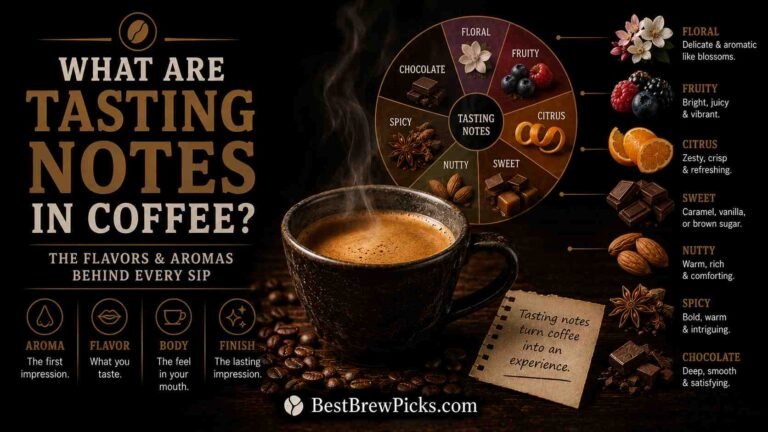
For the broader coffee framework, The Complete Coffee Guide: Machines Methods & Beans shows how beans and brewing affect flavor. If you want to compare it with another sensory concept, What Are Tasting Notes in Coffee? helps explain why those labels matter.
Why the wheel helps beginners
The wheel helps beginners because it reduces pressure. You do not need to guess the exact note right away. You can simply start broad and refine your impression.
That process builds confidence quickly. It turns tasting from a mystery into something you can practice.
Why professionals still use it
Professionals still use it because it creates consistency in communication. Different people may describe a coffee differently, but the wheel gives them a common reference point.
That shared language helps with cupping, roasting, and buying decisions. It makes sensory evaluation more precise and more efficient.
How to Use the Coffee Flavor Wheel
How to use the coffee flavor wheel starts with a simple rule: begin broad, then move inward toward specific notes. If a coffee smells fruity, do not stop there. Ask whether the fruit leans citrus, berry, apple, stone fruit, or tropical. If the coffee seems sweet, ask whether the sweetness feels like caramel, honey, brown sugar, or chocolate.
That approach works because your nose and palate usually notice families before details. The wheel helps you translate those early impressions into more useful language. Therefore, instead of asking “What exactly do I taste?” right away, you first ask “What general family does this fit?”
Use the wheel while smelling the coffee, tasting it, and thinking about the finish. Aroma often points you toward one part of the wheel, while the sip and aftertaste confirm or correct your first guess. If your coffee tastes chocolatey on the nose but citrusy on the palate, both observations can be true and useful.
The best way to practice is to compare your impression with one or two nearby categories, not the entire wheel at once. Over time, you will start moving more quickly from broad descriptions to specific ones. As a result, your tasting notes become more accurate and more consistent.
For help with the brightness side of tasting, Understanding Coffee Acidity & Brightness explains how lively coffee should feel when it is balanced well. If you want to work on tasting technique more generally, How to Taste Coffee Like a Professional gives you a structured method.
Start broad, then narrow
Start broad because the first impression is usually the easiest to notice. A coffee may seem fruity, nutty, or floral before you can tell whether it is blueberry, almond, or jasmine.
Narrowing the note later gives you more accuracy. That is how the wheel turns a rough instinct into a clearer description.
Use smell and taste together
Use smell and taste together because each one gives different information. Aroma can suggest notes that the palate confirms or rejects once you sip.
This combination is the heart of flavor recognition. It helps you avoid overreacting to a single impression.
What Common Tasting Notes Mean
What common tasting notes mean becomes clearer once you group them by flavor family. Fruity notes often show up as citrus, berry, apple, stone fruit, or tropical fruit. Floral notes may remind you of jasmine, rose, or tea-like perfume. Nutty notes often read as almond, hazelnut, or peanut. Chocolate notes may feel like cocoa, milk chocolate, or dark chocolate. Spices can show up as cinnamon, clove, or cardamom. Earthy notes can lean toward cedar, soil, or herbal depth.
These descriptions do not always mean the coffee literally contains those foods or plants. Instead, they describe the sensation and association the coffee creates. Therefore, tasting notes work as a language of resemblance, not as an ingredient list.
Some categories often overlap. A coffee can taste both caramel and nutty, or berry and floral, or chocolate and spice. That overlap is normal and often signals complexity rather than confusion. It means the coffee offers more than one sensory layer at the same time.
The trick is not to force a single perfect label. It is better to identify the strongest impression and then notice what supports it. That approach keeps your tasting grounded and honest.
For roast context, Light Roast vs Dark Roast: Taste Differences explains why some notes appear more clearly at certain roast levels. If you want a more detailed map for flavor families, Understanding Coffee Acidity & Brightness gives helpful context for one of the biggest categories.
Fruity notes
Fruity notes often show up in bright, origin-driven coffees. They can feel crisp, juicy, sweet, or sparkling depending on the bean and the roast.
These notes often appear more clearly in lighter roasts. They also tend to stand out in washed or naturally processed coffees from fruit-forward origins.
Chocolate and nutty notes
Chocolate and nutty notes often feel warmer, rounder, and more familiar. They can create a comforting cup that many people enjoy as a daily coffee.
These flavors are common in medium roasts and in coffees from origins such as Brazil or Colombia. They also work well in blends.
How Roast and Brewing Change Flavor

How roast and brewing change flavor matters because the flavor wheel does not exist in a vacuum. Roast level can preserve or mute certain notes, and brewing can reveal or hide them depending on extraction. A bright, floral coffee may taste lively in pour over but softer in French press. A chocolatey medium roast may feel rich in drip but overly muted if brewed too heavily or too lightly.
Light roasts often preserve more acidity, fruit, and floral character. Medium roasts usually balance sweetness and body with a clearer sense of chocolate, nuts, and caramel. Dark roasts often push the cup toward roast, smoke, and bitterness while reducing the detail that the flavor wheel can help you identify.
Brewing also changes the way flavor appears. Under-extraction can make a coffee taste sour or thin, which may hide the notes you expected. Over-extraction can make it bitter or dry, which can flatten sweetness and blur the distinctions on the wheel. Therefore, the brewing method and the grind matter almost as much as the bean itself.
If you want to compare methods, Pour Over Brewing Steps: A Beginner’s Guide shows how clean extraction can highlight flavor. For a fuller, heavier cup, French Press Brewing Guide (Timing Water Temp) helps explain how body and extraction change the result.
- Use lighter roasts for more fruit and floral detail.
- Use medium roasts for sweetness and balance.
- Use darker roasts for heavier roast-driven notes.
- Use cleaner brew methods to highlight clarity.
- Adjust grind and extraction before blaming the bean.
The coffee flavor wheel also helps you understand what a method does not do well. For example, a very heavy brew method may reduce clarity, while a very dark roast may bury delicate fruit or floral notes. That is useful because it tells you whether to change beans, brew style, or both. In real terms, that saves money and frustration.
According to the Specialty Coffee Association, standard brew guidance often uses water around 195 to 205°F for brewed coffee. You can see more on the SCA’s technical guidance in their coffee standards resources at SCA Coffee Standards. That range gives you a better starting point for tasting than water that is too cool or too hot.
Conclusion
Coffee Flavor Wheel: Tasting Notes Explained gives you a practical way to understand what you taste instead of guessing at random. Once you learn to move from broad categories to specific notes, coffee becomes easier to describe, compare, and enjoy.
The biggest benefit is confidence. You can buy more intelligently, brew with more purpose, and recognize why a cup tastes the way it does. Over time, the wheel turns coffee tasting from a vague impression into a skill you can keep improving.